Eyes & attitude
Bright, responsive, interested in feed. Note squinting, discharge, dullness, isolation, or an unusual posture.
Horse care field guide
Know what normal looks like, spot trouble early, and handle everyday barn routines more safely.
Call your veterinarian now
Two minutes, twice a day
Look before you touch. Compare both sides. Small changes matter most when you know your horse’s usual behavior.
Bright, responsive, interested in feed. Note squinting, discharge, dullness, isolation, or an unusual posture.
Quiet, easy breaths at rest. Watch for flared nostrils, cough, heaving sides, noise, or colored discharge.
Normal appetite, water intake, manure, and gut sounds. No repeated flank-watching, pawing, rolling, or stretching.
Walk willingly and evenly. Feel for new heat, swelling, tenderness, stronger digital pulses, wounds, or loose shoes.
Preventive care
Schedule regular exams and establish vaccination, parasite-control, dental, weight, and senior-care plans with your veterinarian. Keep written records.
Pick feet daily. Use a consistent farrier schedule and respond promptly to sudden lameness, heat, strong pulses, cracks, or a shifted shoe.
Provide constant clean water and forage suited to the horse. Make feed changes gradually; store feed securely and remove moldy or contaminated forage.
Remove sharp edges, toxic plants, loose wire, clutter, and fire hazards. Check fencing, gates, ventilation, footing, and electrical equipment routinely.
Allergies & persistent itching
Insects and environmental allergies are common possibilities, but parasites, infection, contact irritation, pain, and other skin disease can look similar. Persistent rubbing deserves a veterinary workup—not guesswork.
01 · Notice the pattern
Take dated photographs. A simple timeline can be more useful to your veterinarian than trying several products at once.
02 · Reduce exposure safely
Do not start human medication, steroids, medicated shampoos, or major feed eliminations without veterinary direction.
Learn more from the UC Davis Center for Equine Health: Insect Bite Hypersensitivity and A Scratch for Every Itch.
Horse owner toolkit
These eleven practical guides turn routine observations into useful records and emergency preparation. Fill in the worksheets before you need them and review them with your veterinarian.
01 · Baseline profile
Record calm, resting observations on several ordinary days. Your veterinarian’s ranges and your horse’s established baseline matter more than a single generic number.
02 · Emergency contact card
03 · Call now or monitor?
This guide does not diagnose. If signs are severe, rapidly worsening, unfamiliar, or you simply feel something is wrong, call your veterinarian.
04 · While help is coming
Call first, describe what you see, and follow your veterinarian’s directions. Protect yourself, keep the horse as quiet as practical, and do not improvise invasive treatment.
Remove feed, note manure and recent changes, take vital signs if safe, and walk only if your veterinarian advises it. Do not give medication without direction.
Remove feed and water, keep the horse calm with the head lowered, and call immediately. Do not force water, oil, feed, or a hose into the mouth.
Use clean material and steady direct pressure for significant bleeding. Do not remove an embedded object. Photograph the wound and protect it from contamination while awaiting instructions.
Treat squinting, tearing, cloudiness, swelling, or eye trauma as urgent. Prevent rubbing and do not apply leftover eye medication.
Limit movement, place the horse on deep soft footing, and call promptly. Do not force the horse to walk for assessment.
Stop work, move to shade and airflow, begin continuous cooling with cool water, and contact a veterinarian for weakness, confusion, collapse, or failure to recover promptly.
Disease & parasite alerts
Early action protects the affected horse and the rest of the barn. Do not wait for every classic sign before calling your veterinarian, and do not move a horse that may have a contagious disease.
Screwworm flies lay eggs on wounds or body openings. The larvae feed on living tissue, so a small injury can become a rapidly enlarging, painful wound.
Move the horse to a protected area away from flies, prevent wound contamination, and call your veterinarian immediately. Do not transport the horse or discard larvae before receiving instructions; samples may be needed for identification. Inspect every wound daily and follow current animal-health alerts.
USDA screwworm guidance →Strangles is a bacterial infection spread by infected horses and contaminated hands, clothing, buckets, hoses, tack, grooming tools, trailers, and other shared equipment.
Stop movement, separate the horse immediately, use dedicated water, feed, tools, and clothing, and call your veterinarian. Avoid nose-to-nose contact and shared troughs. Your veterinarian should direct testing, treatment, vaccination decisions, cleaning, monitoring of exposed horses, and when isolation may safely end.
AAEP strangles guidance →05 · Property inspection
06 · Florida conditions
Florida’s risk is not one season. Daily heat and humidity, biting insects, lightning, flooding and hurricanes require overlapping plans.
Provide unlimited clean water, shade and airflow. Schedule work for cooler hours, allow acclimation, and stop for unusual fatigue, weakness, very rapid breathing, confusion or poor recovery.
Use physical barriers and veterinarian-approved control. Remove manure and standing water, use fans, and document seasonal skin reactions rather than repeatedly changing products.
Know the safest available shelter and avoid waiting until a storm is overhead. Identify low areas, blocked drainage, unsafe trees and fences that may become inaccessible.
Choose evacuation destinations and routes in advance. Practice loading, keep identification and records ready, and leave early enough to avoid dangerous winds and gridlocked roads.
07 · Trailering & evacuation
08 · Preventive care record
| Care item | Last completed | Next due / plan | Provider or notes |
|---|---|---|---|
| Veterinary wellness exam | |||
| Vaccinations | |||
| Dental examination | |||
| Farrier / hoof care | |||
| Parasite-control plan / fecal testing | |||
| Weight / body-condition review | |||
| Medication review |
09 · Hay guide
Species matters, but maturity, harvest conditions, storage, and the individual cutting can matter just as much. A forage analysis is the only reliable way to know the nutrient and sugar levels in a particular lot.
| Hay type | Typical character | Often considered for | Watch for |
|---|---|---|---|
| TimothyCool-season grass | Usually palatable; texture and nutrition change greatly with maturity. | Many adult horses when the tested lot fits their needs. | Late-cut hay may be coarse; the name alone does not predict sugar or calories. |
| OrchardgrassCool-season grass | Often softer and leafy when harvested well. | Horses that prefer a softer grass hay. | Can be nutritionally rich when cut young; test rather than assume it is “light.” |
| Bermudagrass / CoastalWarm-season grass | Common in the Southeast; fine-stemmed when properly harvested. | Many Florida horses, subject to quality and an appropriate ration. | Avoid overly mature, stemmy, dusty, moldy, or improperly cured bales. |
| AlfalfaLegume | Typically higher in protein, calories, and calcium than grass hay. | Growing, lactating, hard-working, or hard-keeping horses when professionally balanced. | May oversupply energy for an easy keeper; balance the whole diet and do not assume it is appropriate for every horse. |
| Grass–alfalfa mixMixed forage | Can combine grass fiber with some legume nutrient density. | Horses needing more than grass hay alone but not a full alfalfa ration. | The ratio varies bale to bale; consistency and testing matter. |
Inspect every lot
Match the horse
Buy by cleanliness, maturity, consistency, and a representative laboratory analysis—not by hay name or color alone. Review the results and the complete ration with your veterinarian or qualified equine nutritionist.
10 · Senior horses
Older horses vary widely. Regular veterinary and dental care, thoughtful nutrition, comfortable movement, and close observation help identify changes before they become crises.
11 · Printable resources
Print clean copies for the tack room, trailer, barn office, or veterinary folder. Information entered above is included in the printed sheet during this visit.
Safer handling
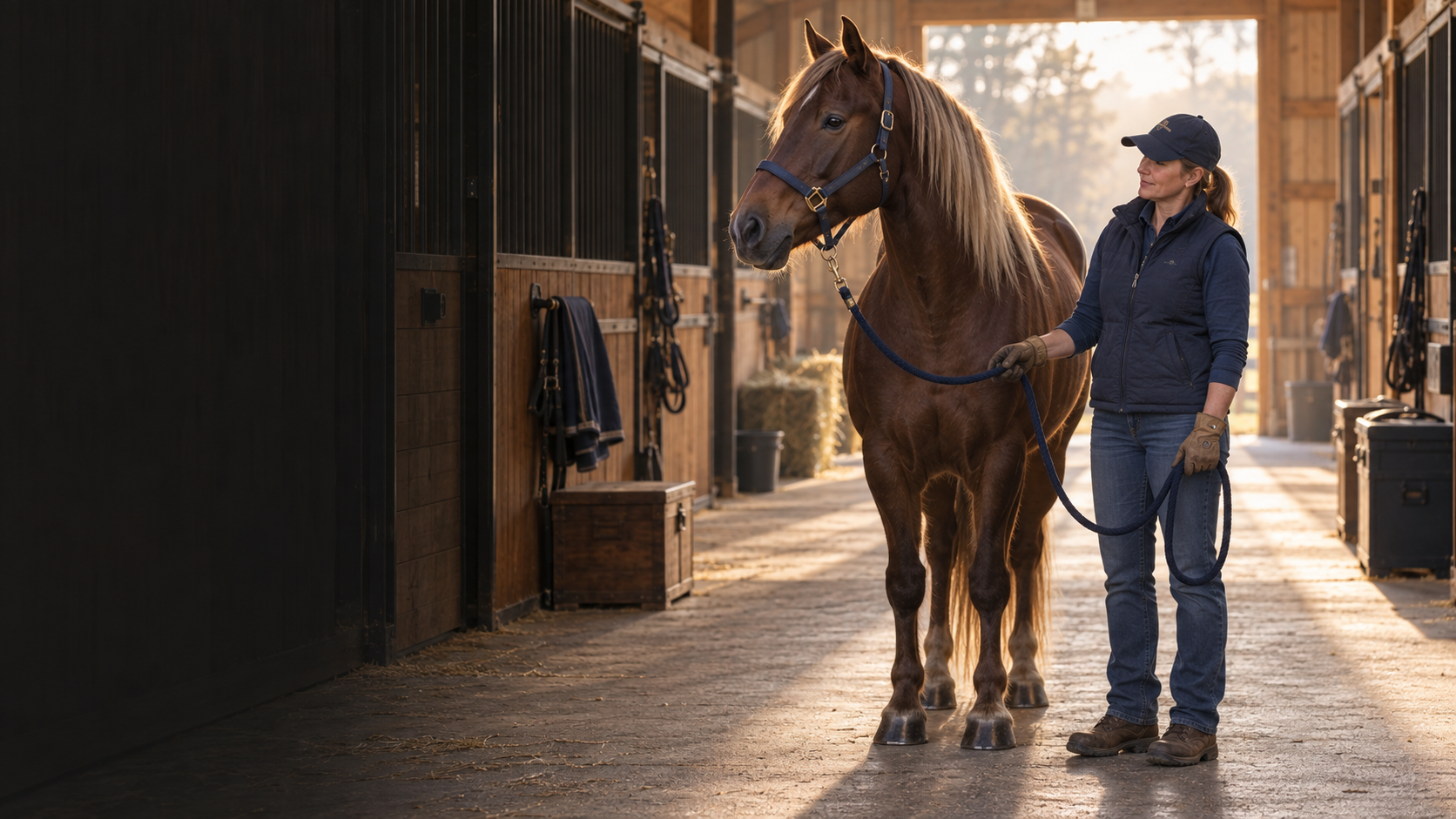
Even a trusted horse can startle. Good habits protect both of you without making every interaction tense.
Speak, enter the horse’s field of view, and watch ears, eyes, weight shifts, and tension.
Fold excess rope; never wrap it around your hand, arm, or body. Wear sturdy closed-toe footwear.
Work near the shoulder, avoid kneeling or sitting, and do not trap yourself between horse and wall.
Use safe tie methods and appropriate hardware. Know where you can step if the horse moves suddenly.
Before an emergency
Save your veterinarian and backup clinic numbers. Post the farm address, gate instructions, trailer plan, and the person authorized to approve care.
Do not give medication or attempt invasive treatment unless your veterinarian directs you.